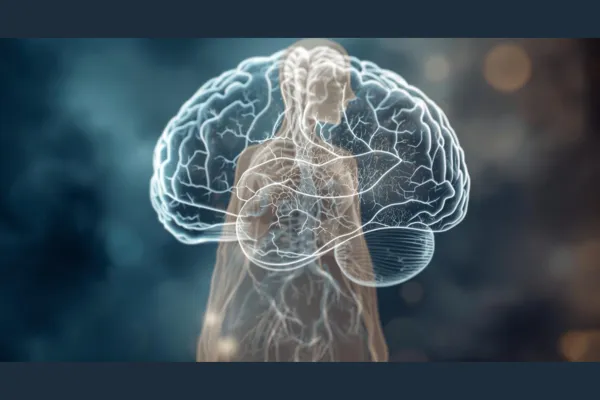
Unlocking Your Inner Pharmacy: How Neurochemistry Regulates Trauma
Most conversations about trauma focus on what happened in the past. What is far more important—and far less discussed—is what is still happening inside the nervous system in the present. Trauma is not simply a memory problem that can be resolved through insight alone. At its core, trauma is a regulation problem. More specifically, it is a problem of neurochemistry that did not turn off when danger passed.
When an overwhelming event occurs, the body does exactly what it is designed to do. It mobilizes energy, sharpens focus, and prioritizes survival. This response is driven primarily by cortisol and adrenaline—powerful stress hormones that prepare the body to respond to threat. The problem is not that these chemicals are released. The problem is that, in trauma, they persist. Long after the original event is over, the nervous system remains on alert, having learned that the world is unpredictable and potentially unsafe.
This is why trauma so often shows up as anxiety that will not settle, chronic exhaustion, hypervigilance, sleep disruption, or emotional reactivity and numbness. These symptoms are frequently misunderstood as signs of weakness or psychological failure. In reality, they are indicators that the body’s internal chemistry is still running survival protocols. Trauma is not a failure of mindset; it is evidence of a nervous system that adapted successfully under extreme conditions.
What is missing from most trauma conversations is an understanding of the body’s inner pharmacy. The brain and nervous system continuously manufacture neurotransmitters and neurohormones that shape how safe, calm, focused, or alert we feel. This internal chemistry is always active and always responsive. You are not dependent solely on external interventions to regulate your nervous system. Your body already produces the chemicals associated with calm, connection, motivation, rest, and repair. The issue is not absence—it is imbalance.
Traditional trauma approaches often emphasize insight, meaning-making, and memory processing. While these can be valuable, insight alone cannot downregulate survival chemistry. Cortisol does not respond to logic, and adrenaline does not respond to reassurance. Neurochemistry responds to signals. This is why telling someone to “just relax” rarely works. You cannot cognitively convince a survival system to stand down.
The nervous system listens to nonverbal information: breath, rhythm, movement, sensory input, predictability, and cues of safety. When these signals change, chemistry follows. Regulation-based practices, when applied correctly, are not coping strategies or mindset hacks. They are biological instructions that directly influence the autonomic nervous system and neurotransmitter balance.
True regulation is not about being calm all the time. Healing is not the absence of activation. A regulated nervous system is one that has range—the ability to activate when needed, deactivate when safe, and move fluidly between states without getting stuck. This flexibility is the true marker of recovery. When survival chemistry quiets, other neurotransmitter systems are able to come online, supporting digestion, immune function, learning, emotional connection, and restorative sleep.
Rebalancing neurochemistry does not require doing more; it requires doing what the nervous system understands. Breathwork directly influences autonomic balance. Gentle, rhythmic movement communicates safety to the body. Mindful attention reduces threat detection rather than increasing it. Nutrition and sleep provide the raw materials necessary for neurotransmitter production and regulation. Over time, these small, repeatable signals retrain the nervous system to stand down from constant vigilance.
Perhaps most importantly, understanding what is happening biologically removes shame. When people realize, “I’m not broken—my nervous system is protecting me,” healing accelerates. The narrative shifts from self-blame to self-regulation, from fixing to retraining.
Trauma healing is not about correcting who you are. It is about re-educating a nervous system that learned survival exceptionally well. Your body is not working against you. It is waiting for new instructions. And those instructions are delivered, every day, through chemistry.
---
Learn something? Share the post with others, and follow me, Allen Kanerva, for more.
Want to learn more on healing trauma?
Subscribe to my YouTube community today: https://www.youtube.com/@allen.kanerva
